What Happens If You Skip Kitchen Hood Cleaning: Fire Risk, Violations, and Insurance Consequences
Skipping kitchen hood cleaning is one of the most costly mistakes a commercial kitchen operator can make. For kitchens serving Utica, NY, the consequences are real: grease fires, code violations, and denied insurance claims. Understanding what happens when you skip kitchen hood cleaning may help you avoid a disaster no business bounces back from easily.
How Grease Buildup Creates a Fire Hazard
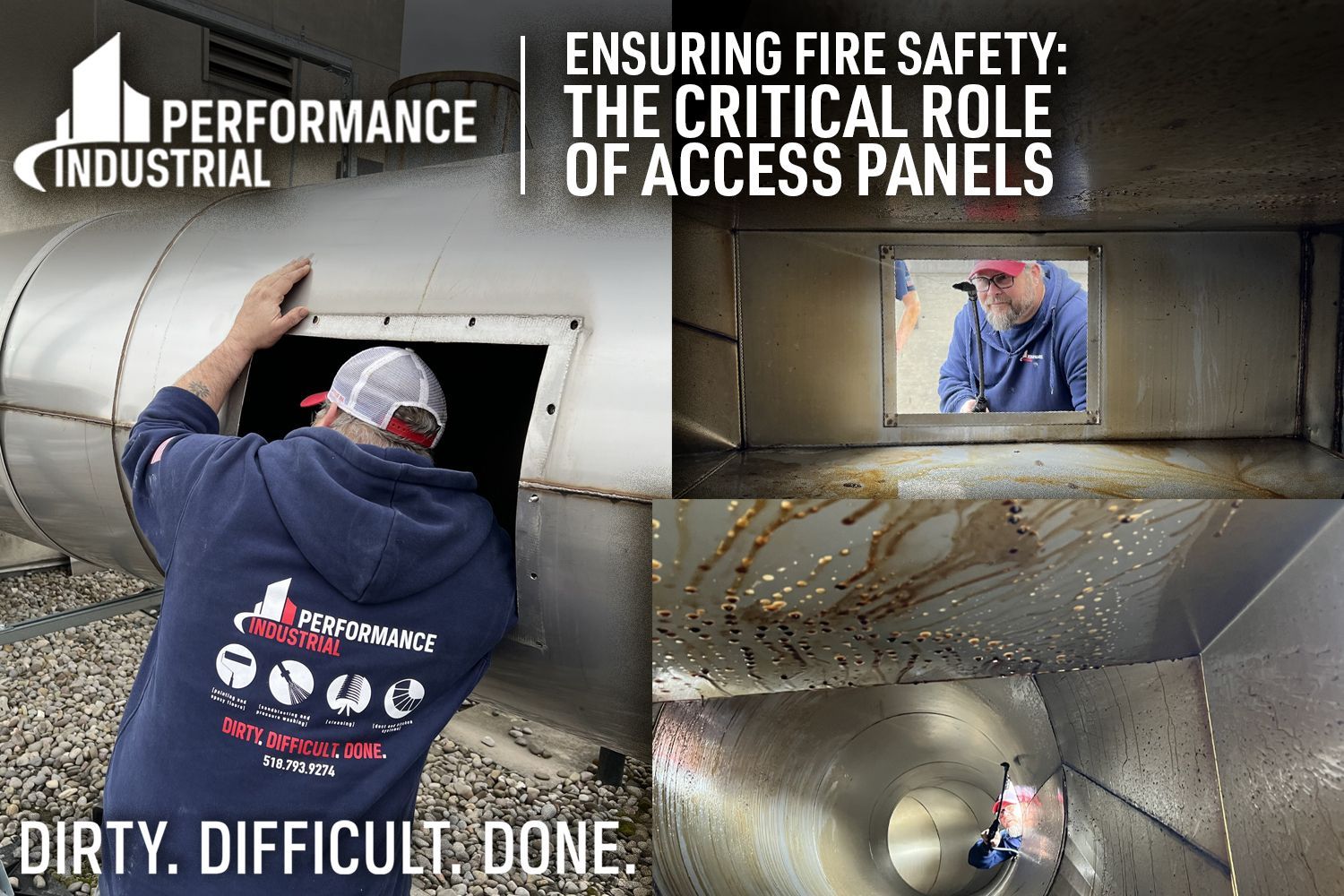
Grease accumulation turns a commercial exhaust system into a fire waiting to happen. Cooking produces grease-laden vapors that condense and stick to interior surfaces, creating highly flammable buildup in areas that are often out of sight.
The danger escalates quickly. Duct fires can travel 40 feet or more in under 60 seconds, outpacing suppression systems calibrated for the hood rather than the full duct run. Even a functioning suppression system may not stop a blaze once grease inside the ductwork ignites.
According to NFPA data, cooking-related hazards contribute to an average of 7,410 structure fires annually in U.S. eating and drinking establishments, causing up to $246 million in direct property damage, 15 civilian deaths, and over 110 injuries each year. Failure to clean was a contributing factor in 22% of all restaurant structure fires, ahead of electrical failure at 14% and mechanical failure at 12%.
Kitchen hood cleaning for kitchens serving Utica, NY, is not a discretionary task. It is a documented safety requirement that protects your staff, your property, and your ability to operate.
What NFPA 96 Violations Actually Look Like
NFPA 96 is the national standard governing commercial kitchen exhaust systems. In New York state, local fire marshals and health inspectors enforce this standard, and violations can result in more than a warning.
Table 11.4 of NFPA 96 establishes required cleaning frequencies: monthly for solid-fuel operations, quarterly for high-volume kitchens, semi-annual for moderate, and annual for low-volume. A busy restaurant on Oriskany Street or a banquet facility near downtown Utica likely falls into the quarterly or semi-annual category at minimum.
A fire marshal who finds overdue kitchen hood cleaning, expired inspection tags, or missing documentation can issue a correction notice. If the violation is severe, the marshal can order the kitchen shut down until corrections are verified. Missing records can create compliance issues even if the system appears clean.
Warning Signs Your Hood Needs Cleaning Now
Watch for these indicators that your system may be overdue:
- Visible grease dripping from hood filters or ductwork seams.
- A strong, persistent grease odor even when the kitchen is not in use.
- Smoke that lingers under the hood canopy during cooking.
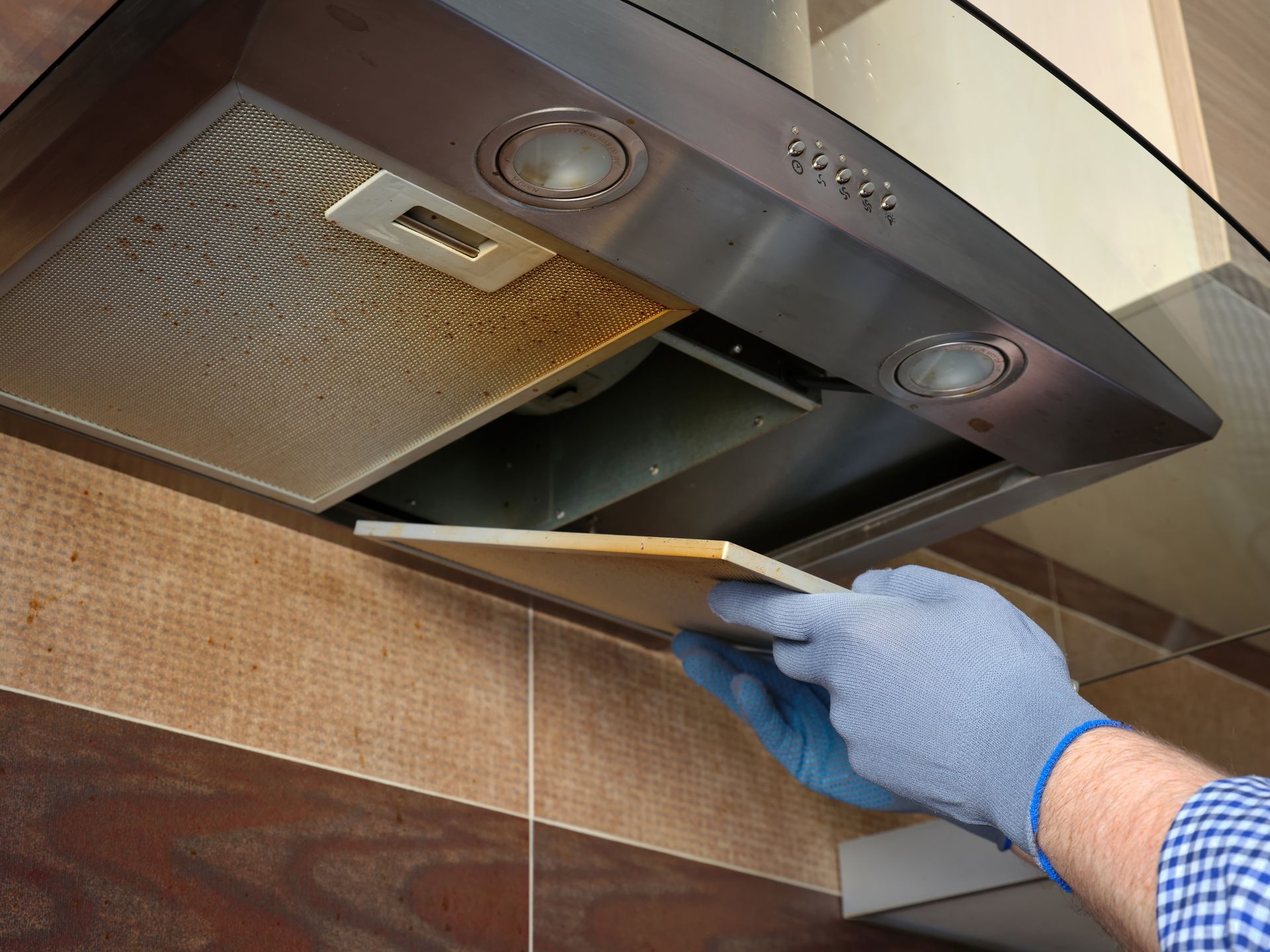
- Discolored or heavily coated baffle filters.
- Your last documented cleaning exceeds your NFPA 96 interval.
- No service sticker or certificate posted on the equipment.
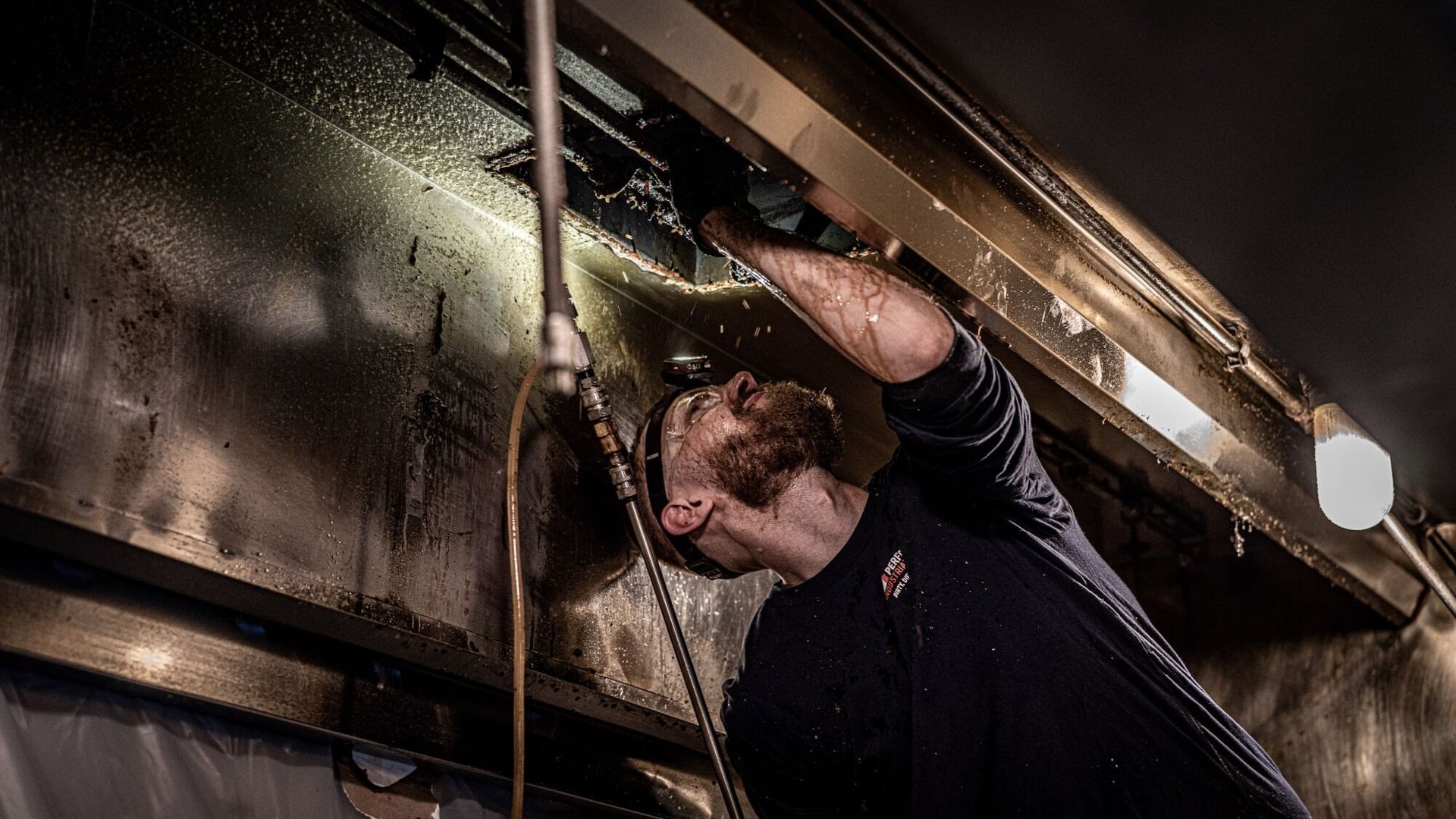
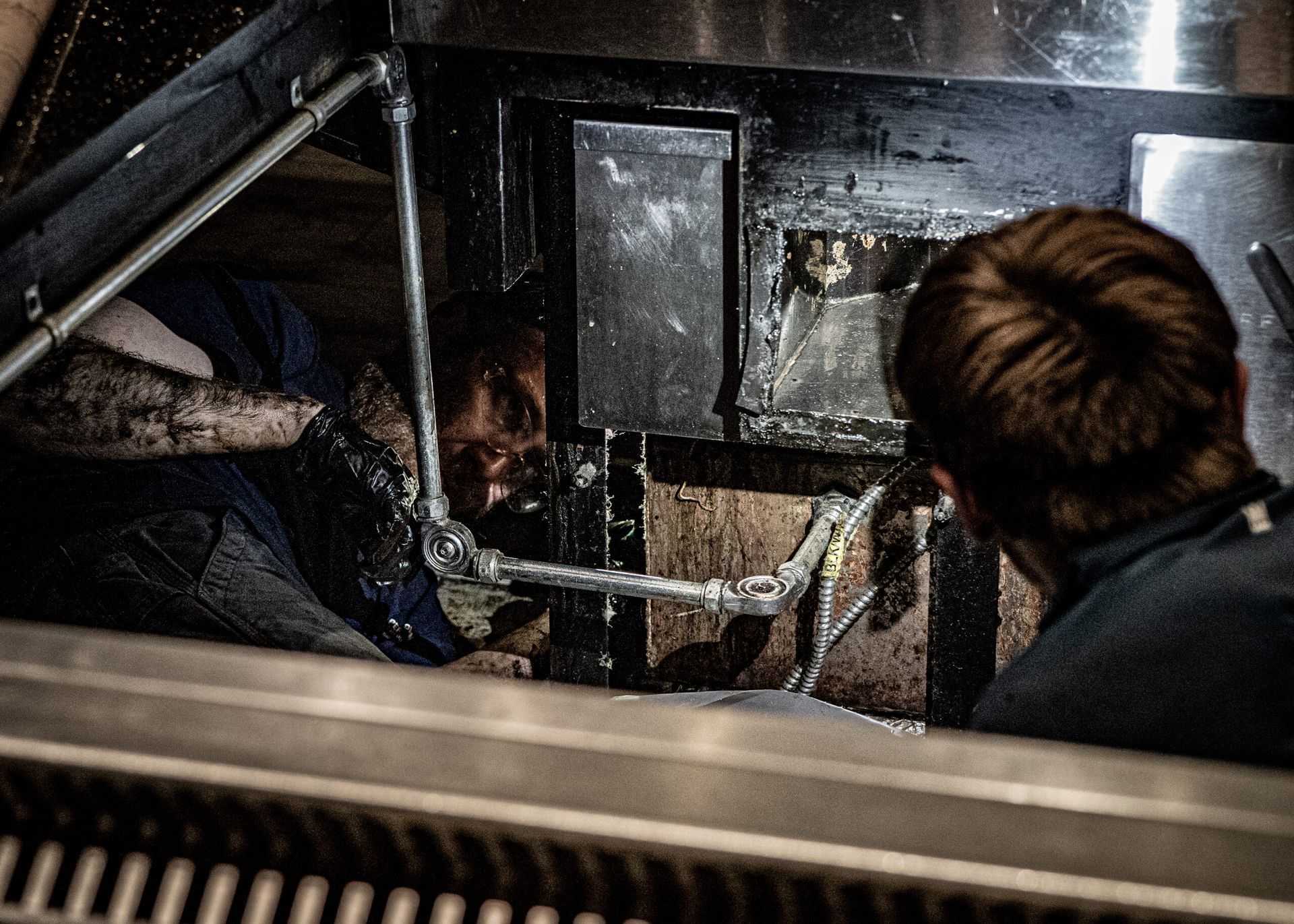
Fire inspectors regularly cite kitchens where previous cleaning services covered only visible areas rather than the full duct and fan assembly.
The Insurance Consequences Nobody Talks About
Most kitchen operators understand fire risk in theory, but the insurance angle often catches them off guard. Insurers can deny fire-related claims if there is no documentation proving your exhaust system was properly maintained.
Commercial property and general liability policies typically require the insured to maintain fire protection systems per applicable codes. A grease fire with an overdue kitchen hood cleaning schedule gives the carrier grounds to deny the claim or reduce the payout.
The paper trail matters as much as the cleaning itself. The adjuster will request cleaning records, inspection reports, and compliance tags. Without a signed service report from a qualified contractor, the insurance company may treat the system as if it was never cleaned at all. Insurers may also raise deductibles or cancel a policy altogether if they deem the kitchen too high-risk.
If a kitchen fire injures someone or damages neighboring property, the cleaning record becomes evidence. An owner who cannot show compliance with NFPA 96 faces a negligence argument that is difficult to defend.
What Does Proper Documentation Look Like?
Every kitchen hood cleaning should produce:
- A signed service report showing the date, technician name, and areas cleaned.
- Before-and-after photos documenting the scope of work.
- A posted service certificate or sticker on the equipment.
- Records retained on-site and accessible during any inspection.
Health Department Inspections and Permit Risk
In Oneida County, the local health department conducts regular inspections of food service establishments under New York State Sanitary Code Subpart 14-1. Grease buildup that creates unsanitary conditions can trigger violations beyond a fine. A restaurant that fails a health inspection may be ordered to close until corrections are made.
Utica restaurants are inspected regularly, and an exhaust system visibly coated in grease is difficult to explain away during a walkthrough.
Keeping your kitchen exhaust cleaning on schedule is your best protection against both fire marshal and health department findings.
Take Action Before It Costs You Everything
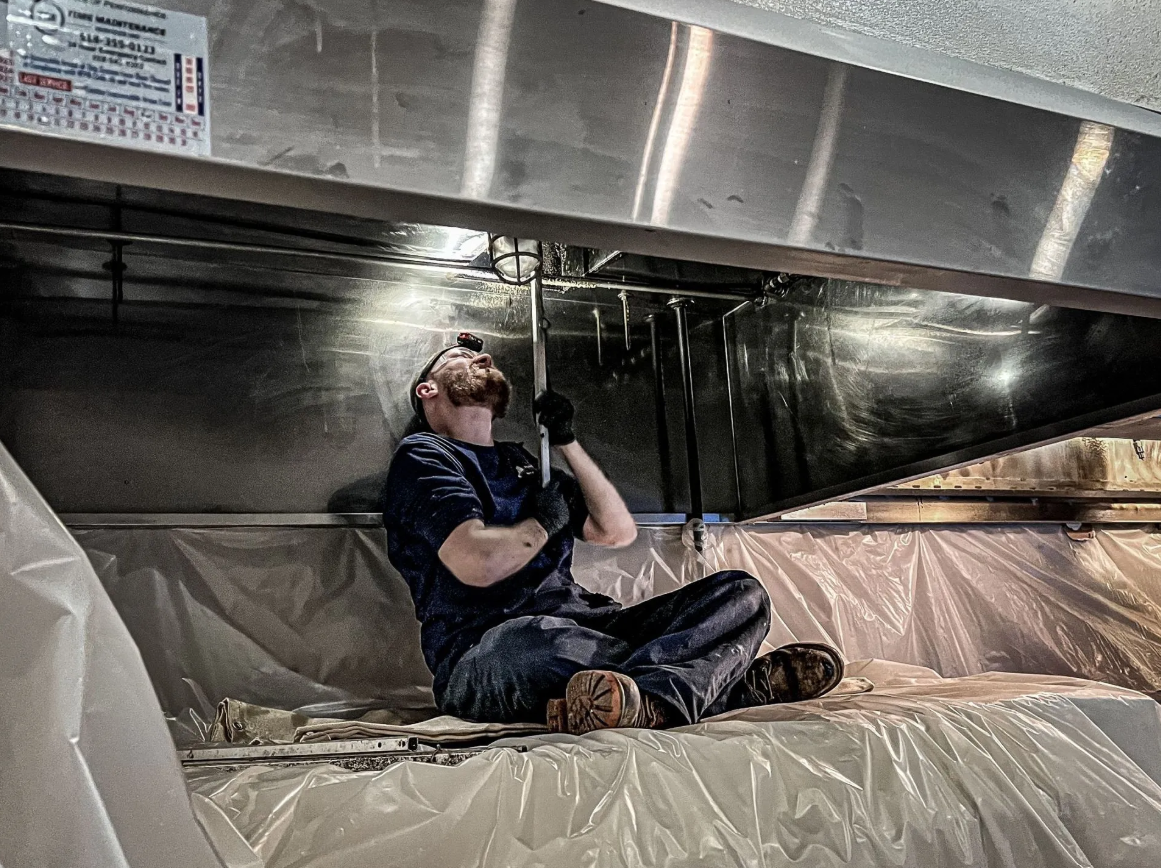
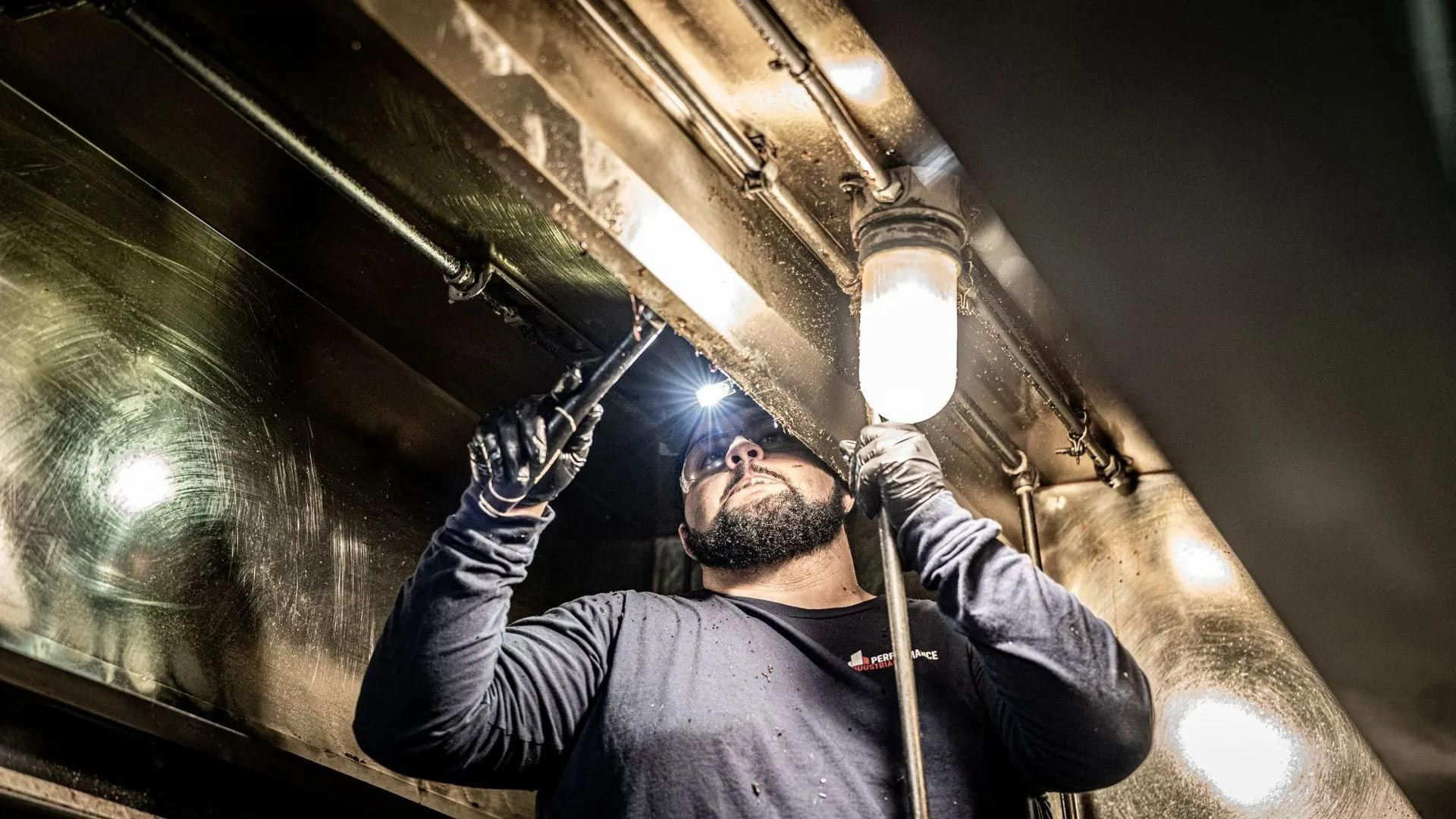
Performance Industrial has served commercial kitchens across New York, including those in the Utica, NY, area, since 1986. Its IKECA-certified team performs kitchen hood cleaning to bare metal, provides full documentation, and helps keep your operation compliant with NFPA 96.
Do not wait for an inspection notice or a close call. Contact Performance Industrial today to schedule service and protect your kitchen, your staff, and your business. Call 518.793.9274 to get started.
Frequently Asked Questions
How Often Is Kitchen Hood Cleaning Required Under NFPA 96?
NFPA 96 requires cleaning based on cooking volume and equipment type. High-volume operations may need monthly or quarterly cleaning, while lower-volume kitchens may qualify for semi-annual or annual service. Your local fire marshal or a certified contractor can help determine the correct interval.
Can a Dirty Hood Cause My Insurance Claim to Be Denied?
Yes. Many policies include maintenance compliance clauses referencing standards like NFPA 96. Without proof of professional cleaning, you may be left covering the full cost of a fire loss on your own.
What Happens If a Fire Inspector Finds Grease Buildup in My Kitchen?
A fire marshal can issue a correction notice, order a shutdown until corrections are verified, and assess fines and reinspection fees. Expired tags or missing documentation can trigger enforcement even when the system looks clean.
Does Cleaning Just the Hood Filters Count as Full Compliance?
No. A full kitchen hood cleaning covers the entire system from cooking surface to rooftop. Filters alone do not satisfy NFPA 96. The ductwork, plenum, and rooftop fan must all be cleaned and documented.